When a project team chooses a gypsum ceiling, they usually do it for practical reasons: clean aesthetics, flexible design, smooth finishing, and compatibility with lighting and HVAC layouts. But after installation, owners and contractors often ask a very realistic question: what is the life expectancy of a gypsum ceiling? The answer is not a single number, because gypsum ceilings do not “wear out” like a machine. Instead, their service life depends on how well the ceiling system is designed, how stable the indoor environment stays over time, and how effectively moisture, movement, and maintenance risks are managed. In a stable interior space, a gypsum ceiling can remain in good condition for many years. In environments with frequent humidity swings, leaks, vibration, or poor installation, problems can appear much earlier.
From our perspective as a supplier, the most useful way to think about gypsum ceiling lifespan is to separate structural lifespan from finish lifespan. The ceiling structure (boards, framing, suspension system) may remain functional while the surface finish (paint, joint lines, decorative coating) requires repairs sooner. At Guangzhou Panda Commercial Development Co., Ltd., we work with customers who use gypsum ceiling systems in commercial buildings, offices, retail spaces, hotels, and residential projects.
What counts as a “gypsum ceiling”?
A gypsum ceiling is typically made from gypsum boards (also commonly called plasterboard or drywall boards) installed on a metal framework or suspension system. Common formats include:
gypsum board ceiling systems (flat ceilings)
suspended gypsum ceilings with framing and hangers
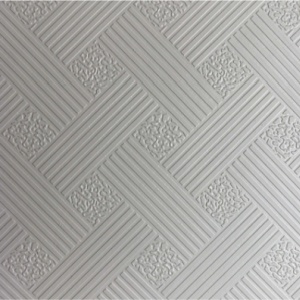
decorative gypsum ceilings with shaped profiles or features
gypsum ceiling panels used in modular or combined designs
A properly installed gypsum ceiling is designed to provide a stable, smooth interior surface while supporting lighting, ventilation, and other integrated ceiling components.
Typical life expectancy of a gypsum ceiling
In many indoor environments where temperature and humidity are relatively stable and there are no repeated leaks, a gypsum ceiling can often remain serviceable for 15–25 years or more. In well-managed commercial interiors, it is not unusual for gypsum ceilings to last even longer structurally, with periodic repainting or minor crack repairs along the way.
However, it is important to understand that the ceiling’s appearance may change before the structure fails. For example, the finish may need repairs after several years, while the main ceiling board and framing remain stable.
Practical view of lifespan
Ceiling Element | What Usually Limits It | Typical Maintenance Need |
Gypsum board structure | Water damage, major movement, poor framing | Low if environment is stable |
Joint lines and finishing | Minor building movement, temperature change | Touch-up and crack repair |
Surface paint/finish | Dust, smoke, aging, cleaning cycles | Repainting cycles over time |
Suspension system | Corrosion, load issues, vibration | Periodic inspection |
This is why gypsum ceiling “life expectancy” is best understood as a combination of structural stability and finish maintenance.
The biggest factor that reduces lifespan: moisture
If there is one factor that shortens gypsum ceiling life faster than anything else, it is water exposure. Gypsum boards are used in many ceiling applications, but they do not perform well when repeatedly exposed to leaks or high moisture levels.
Common moisture-related risks
roof leakage or pipe leakage above ceiling
HVAC condensation issues
bathroom or kitchen humidity without proper ventilation
flood events or water ingress
long-term hidden seepage that weakens board integrity
When gypsum absorbs water, it can lead to:
sagging or soft spots
staining and discoloration
weakened screw holding points
mold risk in extreme cases
loss of surface finish quality
In moisture-prone areas, the correct board type and proper ventilation strategy are essential for maintaining ceiling life.
Installation quality strongly affects life expectancy
A gypsum ceiling is a system, not just a board. The final performance depends heavily on how the framing, joints, and hangers are installed. In our experience, early ceiling problems are often caused by installation issues rather than board material alone.
Installation factors that matter most
correct framing spacing and rigidity
proper board fastening pattern
correct joint treatment and curing
suitable expansion allowance for building movement
good coordination with MEP (lighting, ducts, sprinklers) to avoid cutting stress
correct leveling and hanger load distribution
A ceiling that is slightly under-supported may look fine at first, but can develop cracks, unevenness, or edge movement over time.
Building movement and vibration can shorten finish life
Many ceilings show small cracks not because the gypsum board is “bad,” but because buildings move. Temperature changes, structural settling, and vibration from mechanical equipment can create stress at joints and connection points.
Typical signs
hairline cracks at joints
cracks around lighting cutouts or access panels
small corner cracks near wall connections
These issues often affect appearance more than structural safety. In many cases, they can be repaired through re-finishing rather than replacing the entire ceiling.
How ceiling design influences lifespan
A well-designed gypsum ceiling system often lasts longer because it avoids stress concentration and manages real building conditions more effectively.
Design choices that help
using the correct board thickness for span and load
choosing appropriate framing and suspension design
reinforcing around openings (lights, vents, access panels)
keeping service loads properly supported (not hanging heavy items from the board itself)
planning movement joints where needed in large ceiling areas
In large commercial spaces, movement joints and correct suspension design can be especially important to reduce long-term cracking risk.
Maintenance habits that help gypsum ceilings last longer
Gypsum ceilings typically do not require complex maintenance, but basic habits can extend their appearance life and reduce long-term repair cost.
Practical maintenance checklist
inspect ceilings periodically for stains or moisture marks
address leaks quickly—do not wait
keep ventilation stable in humid rooms
repaint or recoat when surface wear becomes noticeable
avoid repeated impact or pressure on ceiling panels
ensure access panels are properly installed to avoid board stress
Table: Common ceiling problems and what they usually mean
Symptom | Likely Cause | Best Response |
Yellow/brown stain | Leak or condensation | Find source, fix leak, replace damaged section |
Sagging | Water exposure or poor support | Correct cause, replace affected boards |
Hairline cracks | Movement or joint stress | Refinish joints, improve stress areas |
Edge separation | Fastening or framing issue | Reinforce and re-secure, then refinish |
Paint peeling | Moisture or poor finish prep | Improve environment, refinish surface |
Repair vs replacement: how to decide
Not every issue means you must replace the entire gypsum ceiling. In many cases, targeted repair is enough.
Repair is often enough when:
cracks are small and localized
staining is minimal and source is fixed
sagging affects only a small section
the framing remains stable
Replacement is often the better choice when:
the ceiling has widespread water damage
sagging is structural and repeated
mold or severe moisture history exists
the ceiling system design is fundamentally unsuitable for the space
repeated repairs have become more expensive than replacement
A good rule is: if the root cause is solved and damage is localized, repair makes sense. If the root cause is repeated or widespread, replacement is usually more cost-effective long-term.
Special environments: what changes gypsum ceiling lifespan?
Some environments naturally create more ceiling stress than others. If your project fits one of these categories, lifespan planning should include stronger moisture and movement strategies.
Higher-risk environments
bathrooms and locker rooms
kitchens and food preparation zones
pool-related buildings
coastal or high-humidity regions
top-floor areas with roof leakage risk
heavy mechanical zones with vibration
In these spaces, selecting appropriate board types, ensuring proper ventilation, and designing robust suspension systems can make a major difference.
Closing thoughts
So, what is the life expectancy of a gypsum ceiling? In many stable indoor environments, a properly installed gypsum ceiling can often remain serviceable for 15–25 years or more, with periodic surface maintenance like repainting or minor joint repairs. The real life expectancy depends on moisture control, installation quality, structural stability, and how well the ceiling system is designed around real building movement and service loads. The biggest threats to gypsum ceiling life are usually water leaks, repeated humidity exposure, and poor framing support—so focusing on those areas is the most practical way to protect your ceiling investment.
At Guangzhou Panda Commercial Development Co., Ltd., we support customers with gypsum ceiling solutions designed for commercial and residential projects where long-term performance and clean finishing matter. If you are planning a new ceiling project or evaluating replacement materials, you are welcome to learn more through Guangzhou Panda Commercial Development Co., Ltd. and contact our team for product information and project support.
FAQ
1) What is the life expectancy of a gypsum ceiling in a normal indoor room?
In stable indoor conditions without leaks or high humidity, gypsum ceilings often remain serviceable for 15–25 years or more, with periodic repainting and small repairs.
2) What shortens the life expectancy of a gypsum ceiling the most?
Moisture exposure is the biggest factor. Leaks, condensation, and repeated high humidity can cause staining, sagging, and weakened board integrity.
3) Can small cracks in a gypsum ceiling be repaired?
Yes. Many small cracks are caused by minor building movement and can often be repaired with proper joint re-finishing rather than full replacement.
4) When should a gypsum ceiling be replaced instead of repaired?
Replacement is usually better when damage is widespread, sagging is structural, leaks are repeated, or repeated repairs become more costly than installing a new ceiling system.




